1956 - How Can You Not Believe / Honestly Honestly (Bally 1003)
Biography :
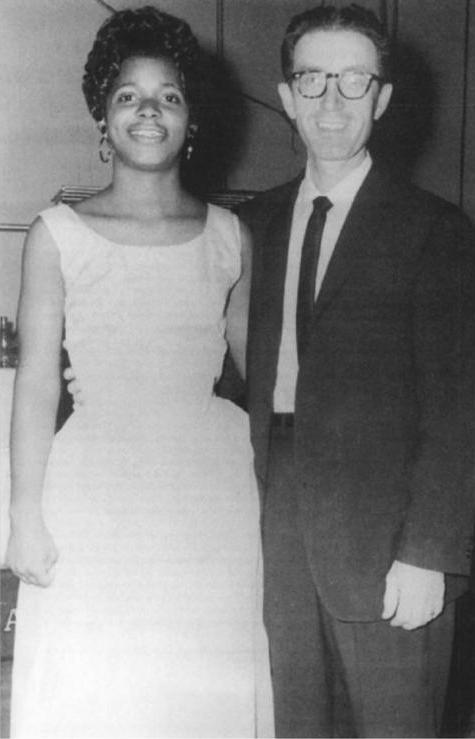
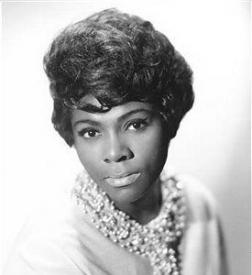
The Gayden Sisters, a south side trio from Chicago made a casual appearance on a Dave Garroway’s TV program from Olivet Baptist church. Following the show, they were deluged with telegrams, letter, and telephone calls- one was a hurried call to appear on Arthur Godfrey's CBS- TV show.
After their appearance on Arthur Godfrey's CBS- TV show, agents, recording companies and producers are trying to place the girls under contract. January 28 1956, the new Bally label signed its second recording act—. Bally Records was an independent record label formed in Chicago in December, 1955. It was active during 1956 and 1957. It was a subsidiary of Bally Manufacturing Company and was headquartered at 203 N. Wabash Avenue in Chicago.
The Gayden sisters, Lujuana,19; Ragina, 17 and Lucretia 15, had no serious plans for singing careers. Lujuana was married, Ragina, a graduate of Morgan Park High School, is a freshman at Roosevelt university. Lucretia, is attending Morgan Park and plans to enter college.
Lujuana began singing when she was 14. When Ragina reached her 13th birthday, they formed a duet, and when Lucretia became 10, they started the Trio. The Trio’s first TV appearance was made about a year ago on the Sachs Amateur hour. The girls sang mainly for small south side socials. With a repertorie made up of spirituals, they also sang at church services.
aka The Georgettes (1)(Ricki) aka The Page Sisters(Ricki & Sonya) aka The Austin Sisters(Ricki & Sonya) aka The Majorettes (1) (Sheila, Joanna, Susie and Rebecca) aka Joanne & The Triangles (3) (Sheila, Joanna,Rebecca) aka Beverly & The Motor Scooters (Ricki, Sheila, Joanna,Rebecca) aka Becky & The Lollipops (2) (Joanna,Rebecca) aka The Bermudas (Sheila, Joanna,Rebecca) aka The Cinders (3) (Ricki, Sheila, Joanna,Rebecca)
Personnel:
Ricki Page
Rebecca Page
Joanna Page
Sheilah Page
Discography :
The Georgettes (1) 1957 - Love Like A Fool / Oh Tonight (Ebb 125) 1959 - Dizzy Over You / Oh Oh Yes (Jackpot 48001) 1960 - Down By The River / Pair Of Eyes (Fleet 1111/UA 237) 1963 - The Story / Little Boy (Troy 1001)
The Page Sisters 1957 - Sweet Sweetheart / All My Love Belongs To You (Zephyr 70-012) 1958 - Dream Boy / If They Only Knew (Liberty 55133)
The Austin Sisters It Happened At The Hop / Love Can Do Most Anything (Edison International 401)
The Majorettes (1) 1962 - Stretch Sensation / Dance With Me (Regency 8000) 1962 - White Levi's / Please Come Back (Troy 1000) 1963 - Let's Do the Kangaroo / Dance With Me (Troy 1004)
Joanne & The Triangles (3) 1963 - After The Showers Come Flowers / Don't Be A Cry Baby (Vip 25003)
Beverly & The Motor Scooters 1964 - He's My Boy / I Had To Walk Home Myself (Epic 9654)
Becky & The Lollipops (2) 1964 - I Don't Care (What They Say) / Come On Home (Troy 6493) 1964 - I Don't Care (What They Say) / My Boyfriend (Epic 9736)
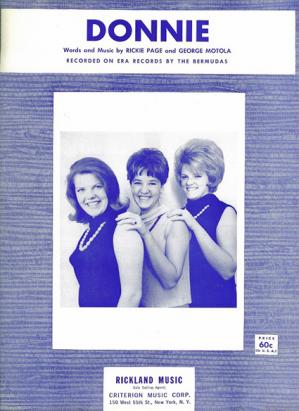
The Bermudas 1964 - Donnie / Chu Sen Ling (Era 3125) 1964 - Blue Dreamer / Seing is Believing (Era 3133)
The Cinders (3) 1964 - I'll Follow You / The Story (Original Sound 43)
Biography :
Rickie Page was born June Evelyn Kuykendall in tiny Lindsay, Oklahoma on 7 November 1929. June became a recording star with releases on Liberty, Dot, Zephyr, and Rendezvous. Sometimes recording with her sister Sonya (The Page Sisters and The Austin Sisters) and Sometimes with some combination of her three daughters Joanna, Sheila, and Becky (Rebecca) Page and their friend Susan Kuykendall.
The Georgettes
She also put records out on Con, Landa, Decca, Epic, Era, Fleet, Hit, Landa, Spar, United Artists, and VIP, using a huge variety of artist names, including The Georgettes. The Georgettes was fronted by Rickie Page in 1957 and were named after her husband/co-writer/producer George Motola. Rickie Page was the only vocalist for the group. The Georgettes appeared on Dick Clark’s American Bandstand in January, 1958.
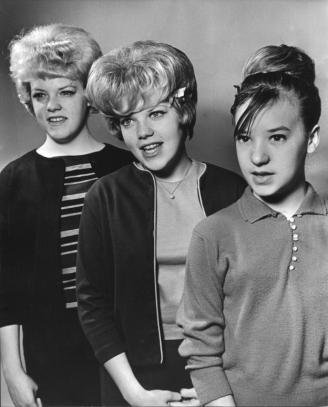
The Majorettes : Sheila, Joanna, Susie and Rebecca
They hired a little Philipino girl, Rosalie, to be the other half and they did the Dick Clark show. The Bermudas, the Majorettes, the Georgettes, Becky & Lollipops, Joanne & the Triangles and Beverly & the Motorscooters – these are just some of the recording names used by Rickie Page and the female members of her musical family. The Majorettes first released "Stretch Sensation" b/w Dance With Me" which is very much inspired by the recordings of Little Eva and Dee Dee Sharp – in 1962 on the Regency International label.
The Bermudas : Joanna, Sheilah & Rebecca
They then released “White Levis” on George Motola’s Troy label later that year. “Let’s Do The Kangaroo” followed in 1963 with “Dance With Me” resurrected for the flipside. Rickie Page and George Motola were active in the music business in the late 50s and 60s. They wrote “Jeannie Jeannie Jeannie” for Eddie Cochran, “Donnie” for the Bermudas and “Borealis” for the Markets among other achievements. George wrote “Goodnight My Love (Pleasant Dreams)” with John Marascalco.
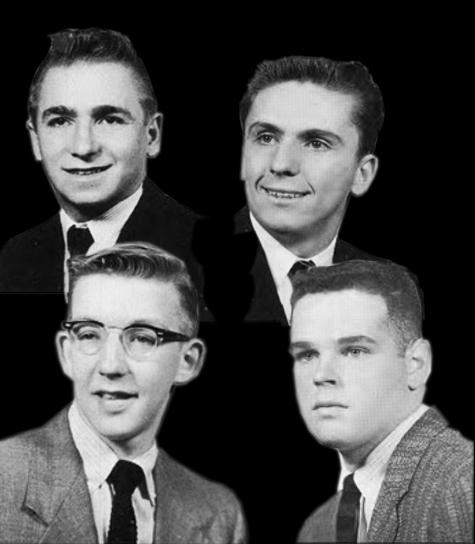
Paste-up Picture - Top : Donald J. Nitz & Kenneth Marhevka - Bottom : Richard Allen Barbieri & Peter Gerosa
The Silvertones (1) (Wallingford Connecticut)
Personnel :
Kenneth "Kenny" Marhevka
Peter "Pete" Gerosa
Donald "Dino" J. Nitz
Richard Allen "Dick" Barbieri
Lin Ken
Discography :
1959 - My Only Love (Feat. Lin-Ken) / Hey Good Looking (Elgin 005/006)
Biography :
Vocal quintet from Wallingford Connecticut fronted by Kenneth "Kenny" Marhevka with Peter "Pete" Gerosa, Donald "Dino" J. Nitz, Richard Allen "Dick" Barbieri and Lin Ken. They all went to Lyman Hall High School. In 1959, they signing a recording contract with Elgin record, a subsidiary of Drum Owned by Clarence Drum. The Silvertones cut "My Only Love" b/w "Hey Good Looking". Bod Distasio, an original Silvertones member and also a Lyman Hall graduate sang on the single.
The enterprising Clarence Drum formed the aforementioned Drum and Elgin labels in 1958, signing several artists, including The Chestnuts and singer Bill Baker, who eventually joined the former group, switching his allegiance from bread to nuts, so to speak. Drum made some money when several of his releases were licensed to other labels, but not enough to keep the companies afloat past 1961.
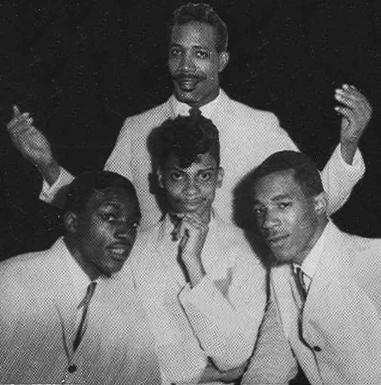
The Veltones Singles : 1959 - Someday / Fool In Love (Satellite 100/Mercury 71526) Unreleased : 1958 - Did You (Sun) 1958 - Good Gracious (Fire) (Sun)
Carla Thomas bb The Veltones (Uncredited) 1960 - Gee Whiz (Look At His Eyes) / For You (Satellite 102/Atlantic 2086)
The Vel Tones (3) 1966 - I Do / Darling (Goldwax 301)
Biography :
Before its glory days as Stax, the label was called Satellite — founded in 1957, by Jim Stewart in his wife’s uncle’s garage in Memphis. Stewart was a fiddle player and so his tastes naturally leaned toward country music, which is what he originally sought to record and release on Satellite, along with rockabilly and pop tunes. A year after starting out, Stewart got a much-needed financial boost from his sister Estelle Axton, who mortgaged her house to buy a console tape recorder, and in so doing, became a financial partner in Satellite. In 1959, she helped the burgeoning label out of the garage and into a better facility in Brunswick, Tenn. (about 20 miles northeast of Memphis).
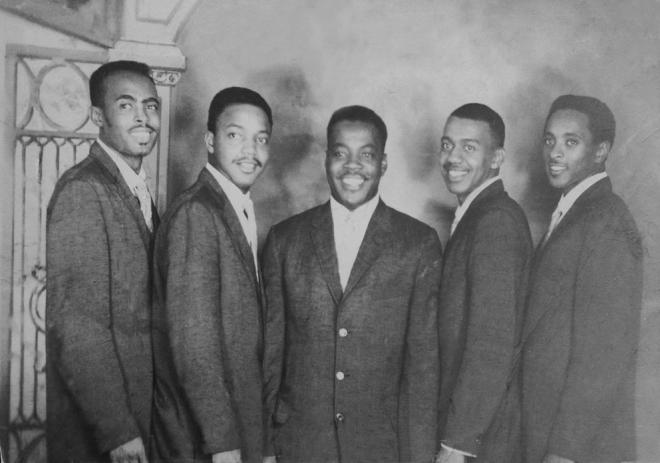
It was during Satellite’s sabbatical in Brunswick that Stewart became interested in R&B music. Producer, songwriter and guitarist Lincoln Wayne “Chips” Moman helped turn him on to some of the local groups, one of which was a black vocal quintet that called themselves the Veltones (sometimes written Vel Tones). The group, composed of Samuel Jones, Alvin Standard, Kenneth Patterson, George Powell and Jimmy Ellis, had been singing in Memphis since 1952, taking their inspiration from doo-wop. Stewart enjoyed the Veltones’ smooth sound and offered to record and release a single for the group on Satellite.
Carla Thomas & Jim Stewart
On a handful of occasions in the spring of 1959, the Veltones trucked on out to Brunswick to record a pair of songs. Chips Moman would serve as the guitarist on the session, along with bassist Jimbo Hale and drummer Jerry “Satch” Arnold. Moman and Arnold also wrote the song selected for the A-side, ‘Fool in Love,’ which features Chips’ ghostly, twangy lead guitar — a peculiar sound on a ’50s R&B recording. The B-side was the more traditionally sounding ballad ‘Someday,’ with songwriting credit given to the group. Although it wasn’t the first record released on the label, ‘Fool in Love’/‘Someday’ was released in the summer of 1959 as Satellite 100 . As it turned out, the reboot was appropriate. Of course, the Veltones record would be the first by a black group on a label that would soon become world famous for R&B music. In addition, the single marked the first time Stewart and Axton made any money from their record label. Since Satellite could only manage to distribute copies regionally, Mercury Records contacted Stewart with an offer to take the record national. Mercury paid Satellite between $400-500 for the rights and re-released the record in September 1959. However, the record flopped and no one saw any more money from ‘Fool in Love.’ The Veltones are also the backing vocal group on 'Gee Whiz' by Carla Thomas (some people say the Del-Rios) . That hit brought the fledgling record company to preeminence as Stax Records. In 1966 The Veltones would cut two sides for Goldwax Records. although by the time of this single there had been some personnel changes. http://theboombox.com/stax-records-first-r-and-b-song/?trackback=tsmclip http://aln3.albumlinernotes.com/Stax_Volt_-_Volume_1.html
Vocal group from New York, the Mystics cut "Teenage Sweetheart" b/w "Rockin' Yodel" for Chatam records, 164 East 56th Street in New York.
Perhaps because there’s the Mystics from Brooklyn, their "Hushabye" was released in May of 1959 and spent nine weeks of that spring and summer on the charts, rising to number 20, "Teenage Sweetheart" b/w "Rockin' Yodel" was Reissued using same label name and number, but credited to the Champs.
Singles : 1958 - I Had A Love / (Be My) Pussy Cat (Ember 1043)
Unreleased : 1958- Running After You (Ember) 1958- Betty Jean (Ember)
Biography :
The Boptones were a group from Brooklyn, they were from Bensonhurst Brooklyn around the 75th street 19th ave area and they all went to Lafayette High School. The Group was known as Nicky-Bop and the Boptones early on. They auditioned for Ted Mack's Amateur Hour in 1958.
The Boptones in the wings
During the audition they asked the group what we wanted most. David Antebi said « to sing with Alan Freeds rock and roll show at the Brooklyn Paramount theatre ». Unbeknownst to The Boptones, the show arranged for Freed to take the group on tour with his show. They were on the same bill with Chuck Berry, Frankie Lymon, Jerry Lee Lewis, Little Richard, Danny and the Juniors, Buddy Holly, and many others.
The original members of the Boptones were John Ench (Second Tenor), who sang the lead on At the Hop, Nick Lampirello (Lead), who sang the lead on At My Front Door, Kenny Pollack (First Tenor) and David Antebi (Bass), the kid with the glasses. They were introduced to Ember through Alan Freed.
Dave Antebi with Chuck Berry in the wings
On their recordings, Bob Kutner, replaced Kenny Pollack. They Recorded four songs for Herald Ember records, and came their unique single : « I Had A Love » (an original by the four group members) with the B-side « (Be My) Pussy Cat ». Nick Continued his musical career, recording as Nick Lampe for Atlantic in the sixties, while Bob Kutner joined the Vocal-Airs who did « Dance, Dance » For Herald in 1962. Thanks to David Antebi
Videos :
At The Hop (On Amateur Hour March 8, 1958)
At My Front Door (On The Amateur Hour March 15, 1958)
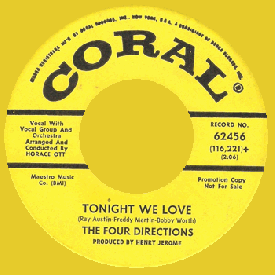
1965 - Tonight We Love / (Doin'The) Arthur (Coral 62456)
Biography :
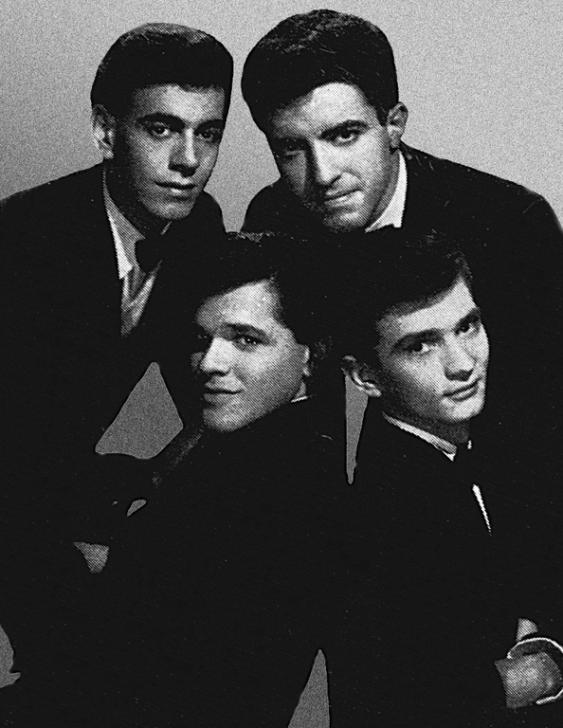
This four-member vocal group from Wantagh consisted of lead singer Tony Presto, First Tenor Dominick Montiglio, Baritone Joe Riccobene and Second Tenor Chuck Rothberg. Tony Presto also sang lead with another group called the Themes who recorded "Marnie (I Love You)" b/w "There's No Moon Out Tonight" for the Stork label in 1964
Dee Dee Warwick (back up singer)
The Four Directions recorded "Tonight We Love" b/w "(Doin'The) Arthur" on the Coral label. "Tonight We Love" was recorded in 1964 at Decca with a 23 piece orchestra, plus three female back up singers, one of whom was Dione Warwick's sister, Dee Dee Warwick. Henry Jerome was the A&R guy & Horace Ott was the conductor/arranger.
The Chaunteurs Singles : 1961 - Wishin' Well / New Rockin' Baby (La Salle 501) Unreleased : 1961 - I'll Do What You Want Me to Do (La Salle)
The Chanteurs (1) 1963 - You've Got A Great Love / The Grizzly Bear (Vee Jay 519)
Biography :
Eugene Booker Record was born in Chicago on the 23 December 1940. As a young boy his interest in music first took hold with song writing and guitar lessons. When he was thirteen at Englewood high school he participated in musical programs and had visions of getting into the music business. At high school he became a member of the vocal group the Wrens. He next formed the Chanteurs in the late fifties with future Chi-Lites Robert Lester and Clarence Johnson and Sollie McElroy from The Moroccos.
The Wrens with Eugene Record (Middle)
In 1954, After the first two years of the Flamingos, Lead singer Sollie McElroy sang with the Moroccos for about three years. After scoring several regional hits, The Moroccos disbanded in 1957. In 1961, Sollie McElroy joined The Chaunteurs which included Clarence Johnson (Baritone), Robert "Squirrel" Lester (Second Tenor), Eddie Reed (Bass) and Eugene Record (First Tenor). Sollie McElroy and Eugene Record shared Lead on the La Salle Label release, which sounds more like a 1957 recording. Burt Bowen (Baritone) replaced Sollie and in 1963 the group cut "You've Got A Great Love" b/w "The Grizzly Bear" on Vee Jay records in 1963 as The Chanteurs.
The Chaunteurs (1961) : Clarence Johnson, Robert Lester, Eddie Reed, Sollie McElroy and Eugene Record
The Next Year, Eugene Record, Robert "Squirrel" Lester, and Clarence Johnson) teamed up with Marshall Thompson and Creadel "Red" Jones of the Desidero's to form the Hi-lites. Noting that the name Hi-lites was already in use, and wishing to add a tribute to their home town of Chicago, they changed their name to "Marshall and the Chi-Lites" in 1964. Johnson left later that year, and their name was subsequently shortened to The Chi-Lites.
Singles: 1961 - Motorcycle / I Don't Believe Then (Madison 169/ Amy 835) 1962 - Wild Flower / Express Train (Amy 845) 1962 - Cry, Little Boy, Cry / Get Up And Do The Wobble (Amy 860) Unreleased : 1962 - She'll Be The One Who's Crying (Amy) 1962 - Here Comes The Garbage Man (Amy) 1962 - The Biggest Lie I Ever Told (Amy) 1962 - My Little Girl (Amy) 1962 - Say What You Got To Say (Amy)
Jerry Landis bb The Triumphs (1)(uncredited) 1961 - I’m Lonely / I Wish I Weren't In Love (Canadian American 130) 1962 - The Lone Teen Ranger / Lisa (Amy 875)
Tico bb The Triumphs (1)(uncredited) 1962 - Cards Of Love / Noise (Amy 876 / Jackson scott 14)
Biography :
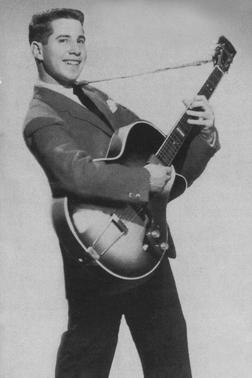
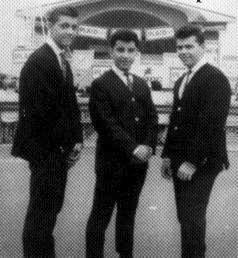
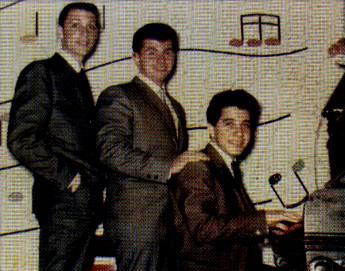
The story begins in the summer of 1961 when a guy by the name of Jerry Landis aka Paul Simon (that Paul Simon) was already a singer with quite a reputation. Between 1957 and 1961, Simon wrote, recorded, and released many songs, occasionally reuniting with Garfunkel as Tom & Jerry for some singles. Simon already had a few songs under his belt and was working with Amy Records producing music. His path would cross a group of young kids hanging out in the Kew Garden Hills area of Flushing, New York. Original member Marty Cooper had moved from Brooklyn and started attending Parsons Jr. High School. He met Mickey Borack at school. Marty and Mickey would hang out on the street corner near the Honeycomb Luncheonette and sing.
Paul Simon "Jerry Landis"
There, they met up with Howie Beck . They also had a female member - Gail Lynn who didn't continue with the group when they later started recording. They started performing together (Marty, Mickey and Gail) and later won a local talent contest at their school - Parsons Jr. High School, Flushing, New York. The group performed some more gigs and wound up one night at Forest Hills Jewish Centre. Simon was in the audience that night and caught their show. Looking for new talent to produce, he approached the group about doing some work with him. He started grooming them to record.
Simon used the group to back him on a recording for Canadian American Records in October 1961. They released I Wish I Weren't In Love under the name of "Jerry Landis." Following the Canadian American release, the group joined with Howie Beck and recorded two songs for Madison Records - Motorcycle and I Don't Believe Them. On some of the Tico and the Triumphs' records, Simon can be heard singing lead and on others it is Cooper. Madison later went bankrupt and sold the master for "Motorcycle" to Amy Records.
Paul Simon "Jerry Landis"
Amy released it again and in November 1961 the record did well hitting around 99 on the charts thanks to being featured on Murray the K's show in WINS. The song was the "pick of the week."Following the release of Motorcycle, the group did a lot of record hops. But Simon never performed with the group. It was always just Cooper, Borack and Beck. So, while Paul Simon certainly was a big part of the group's success and sound, it was really these three guys that were Tico and Triumphs. It was Marty Cooper that sang lead on all of the group's live performances. The group's next two Amy releases did not do as well.
The group (credited only as Tico) without Simon went on to release Cards of Love b/w Noise in December 1962. Cooper took the lead on those. It was a return to the doo-wop sound that the group always loved. At that point, Simon had moved on to running Amy and later Bell records and he turned his attention to other artists. The group backed Simon on The Lone Teen Ranger b/w Lisa (Amy 865 - 1962) and after that the group split up. Simon had been partners with a guy named Bobby Susser. Cooper teamed up with Susser and start writing and producing records. http://rthimel.free.fr/Paul-Simon-nouvelle-version/fs-sg-titre-album-tom-jerry-meet-tico-triumphs.htm
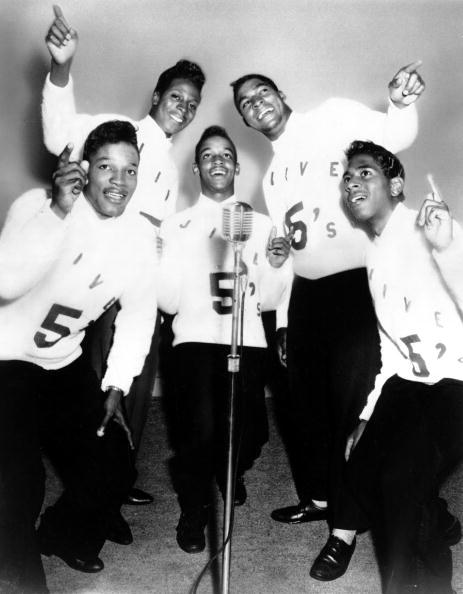
The Jive Five (Brooklyn, New York) The Early Years
Personnel :
Eugene Pitt (Lead)
Norman Johnson (Bass)
Richard Harris (Second Tenor)
Billy Prophet (Baritone)
Jerome Hanna (First Tenor)
Discography :
The Jive Five
Singles: 1961 - My True Story / When I Was Single (Beltone 1006) 1961 - Never, Never / People From Another World (Beltone 1014) 1962 - Hully Gully Callin' Time / No Not Again (Beltone 2019) 1962 - What Time Is It / Beggin' You Please (Beltone 2024) 1962 - Do You Hear Wedding Bells / These Golden Rings (Beltone 2029) 1963 - Johnny Never Knew / Lily Marlene (Beltone 2030) 1963 - Rain / She's My Girl (Beltone 2034) 1964 - United / Prove Every Word You Say (Sketch 219)
Unreleased : 1962 - Hurry Back (Beltone) 1962 - You Know What I Would Do (Beltone) 1962 - The Girl With The Wind In Her Hair (Beltone) 1962 - I Don't Want To Be Without You Baby (Beltone)
Eugene Pitt (bb The Jive Five ) 1962 - She's My Girl / Every Day Is Like A Year (Beltone 2027)
Biography :
Eugene Pitt hailed from Brooklyn's Bedford-Stuyvesant neighborhood, musically influenced by his father, a gospel singer, who taught Eugene and his sisters how to harmonize; they performed gospel songs in churches until about 1950, when he entered his restless teenage years. The atmosphere of Brooklyn's streets, with doo wop singers everywhere, stirred a desire for rhythm and blues stardom and by mid-decade he had joined a group called The Akrons . A little later Eugene sang with a group headed by Claude Johnson, but they separated when Johnson left for Long Island to join The Genies, the outfit that later scored a national hit with "Who's That Knocking."
Top : Norman Johnson, Richard Harris & Eugene Pitt - Bottom : Billy Prophet & Jerome Hanna
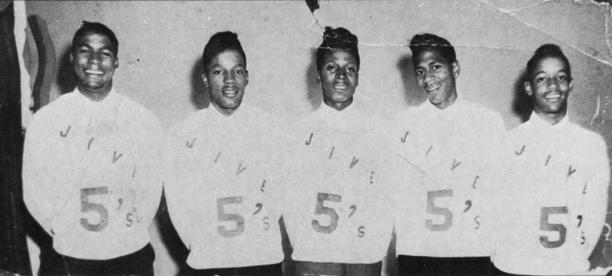
In 1959 Pitt put together his own group, The Jive Five, with friends from the neighborhood. He and Jerome Hanna sang tenor, supported by Richard Harris, Thurmon "Billy" Prophet and bass singer Norman Johnson. Not much happened at first; Pitt was working as a stock clerk in a supermarket in early '61 when all five jivers auditioned for Les Cahan and Joe Rene at the Beltone Studio on Broadway in New York. Cahan, who'd been running the studio for several years, had decided to branch out with Beltone Records and made a spectacular splash shortly afterwards with Bobby Lewis's "Tossin' and Turnin'," the biggest hit of the entire year. One of the songs the Jive Five sang that day was an original ballad by Pitt and Oscar Waltzer, "My True Story," based on Eugene's own experience of losing a girlfriend to one of his (former?) pals.
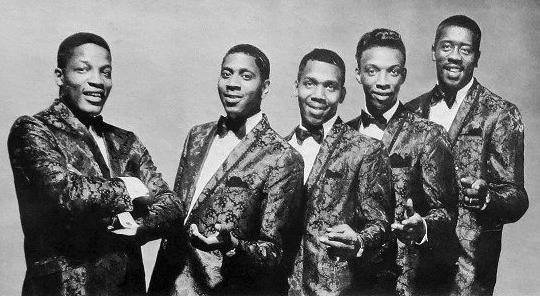
Billy Prophet, Eugene Pitt, Jerome Hanna, Norman Johnson & Richard Harris
Doo wop was at the peak of its early 1960s "revival," a time of renewed interest in many '50s recordings. "My True Story," with backing by Rene's band, had an addicting 'Cry, cry-y-y...' vocal hook (often resulting in record store customers who didn't know the actual title offering their own wailing "Cry-cry-cry" in attempts to identify the song). It captured the essence of older doo wop but got off to a slow start at the beginning of summer '61; by September, though, it had gained momentum, moving into the top ten on the pop charts while hitting number one R&B. The uptempo flip side "When I Was Single" lamented married life (without mention of a "Mother-In-Law" as Ernie K-Doe had done with great success a few months earlier) and had a following of its own.
The quintet followed with the low-charting "Never, Never" at the end of the year, an outstanding track regardless of its similarity to the debut single. Many of the Beltone B sides could have been hits under the right circumstances, including this 45's flip, "People From Another World," a wild slice of flying saucer paranoia. "Hully Gully Callin' Time," with the expanded label credit The Jive Five with Eugene Pitt, was the group's contribution to a current dance craze. Next came the best ballad since the initial release, "What Time Is It?" Pitt's falsetto (often used to supplement his lead vocals) is at full throttle on this track, which might have been much bigger had it been possible to turn the clock back a year or two prior to the fall of '62.
(On United Artists) Eugene Pitt, Norman Johnson, Casey Spencer, Beatrice Best & Webster Harris
After this, Billy Prophet left to pursue a solo career and, tragically, Jerome Hanna developed walking pneumonia and passed away, leaving the group in search of replacements. Andre Coles signed on briefly. Casey Spencer joined for a longer stretch.Figuring ballads were the Five's forte, Cahan put out "These Golden Rings" late in the year and it did well, making an appearance on the R&B charts. "Rain," with its hypnotic 'drip...drop...' backing vocals by J.R. Bailey, Bobby Phillips and Charles Brooks, all former members of The Cadillacs, appeared in early 1963 as Beltone Records fell deeper into financial straits with distributor King Records. With no major hits since the Bobby Lewis and Jive Five smashes of '61, Cahan had stood by as finances gradually dwindled. The label ceased operation in early '64 but Cahan kept the recording studio going as before.The Jive Five An "extended family" of singers came and went over the next couple of decades, the one constant being lead singer Eugene Pitt. After a one-shot '64 release on the tiny Sketch label, "United" (remaking the 1957 hit by Otis Williams and his Charms), they signed with United Artists Records in 1965.
Songs :
My True Story When I Was Single Never, Never
People From Another World Hully Gully Callin' Time No Not Again
What Time Is It Beggin' You Please She's My Girl
Every Day Is Like A Year Do You Hear Wedding Bells These Golden Rings
Johnny Never Knew Lily Marlene Rain
United Hurry Back You Know What I Would Do
The Girl With The Wind In Her Hair I Don't Want To Be Without You Baby Prove Every Word You Say


/image%2F0655033%2F20241207%2Fob_c217a1_belmonts-site-2.jpeg)